The digital healthcare landscape has traded clarity for clicks, value for virality. In 2026, it’s time to stop optimizing for attention and start building something that actually matters.
01 –
Your Healthcare Content Isn’t Neutral. It’s Shaping Lives.
Every piece of healthcare content carries real consequence. It changes how patients perceive their own bodies, how they understand risk, and whether they’ll trust you when it matters most.
In 2026, content has become the primary way people learn about their health and make medical decisions. That’s not marketing speak. Your blog posts, social media updates, and email campaigns don’t just inform. They guide behavior. They build or destroy trust. They shape clinical outcomes.
“If content shapes awareness, then healthcare content shapes destiny.”
This means your digital content must be treated as an extension of patient care itself. You’re delivering medical guidance at scale, often without any human safety net. You can’t outsource that responsibility.
02 –
Patient Trust Beats Information Every Single Time
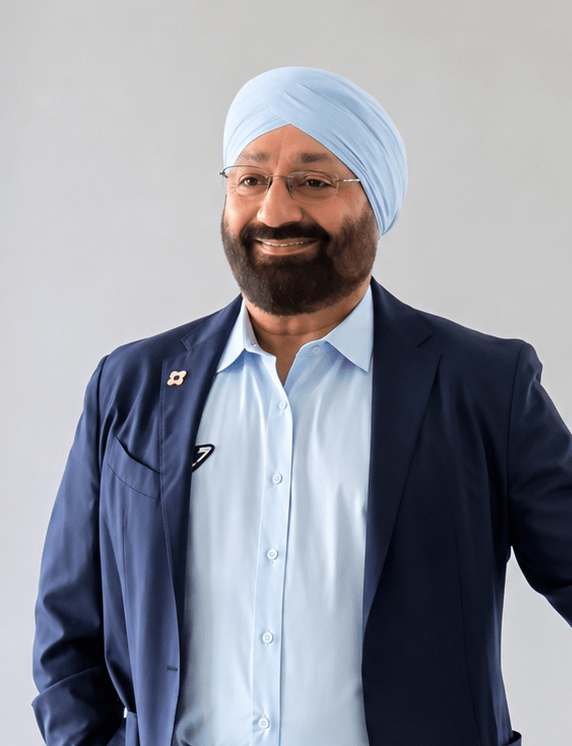
I’ve spent over 30 years in medicine — from interventional radiology at Rush University Medical Center to founding MIMIT Health and CIMSS. Here’s what I know for certain: healthcare decisions aren’t made on information alone. They’re made on trust.
Give patients perfect information without trust, and they’ll ignore it. Give them trustworthy guidance, and they’ll act on it. That’s the difference between content that sits on a screen and content that saves lives.
Build Slowly
Trust isn’t earned through viral moments. It’s compounded across hundreds of consistent, accurate, patient-first interactions over time.
Build Ethically
Never sacrifice clinical accuracy for engagement. Patient-centered communication increases participation in medical decision-making.
Build Consistently
Never optimize purely for attention or virality. Engagement metrics that mean nothing to actual patient outcomes are worthless.
At MIMIT Health, we built our entire model around patient centricity — not as a buzzword, but as a business strategy. We learned from Amazon, Costco, Salesforce, Disney, and Ritz-Carlton that patients don’t want fancy procedures or cutting-edge technology for its own sake. They want freedom from disease. They want normal, healthy lives.
03 –
We’re Drowning in Health Content. Most of It Makes Things Worse.
The internet has become a firehose of contradictory health information. I see this every day in practice. Patients arrive overwhelmed, confused, and terrified — not because they lacked access to content, but because they’ve been consuming content from social media influencers, wellness gurus, and articles designed purely to get clicks.
They’ve consumed plenty of content. They haven’t gained any understanding.
Healthcare content must move past entertainment-driven narratives, fear-based messaging, and influencer authority without medical accountability.
I call this “freedom within a framework.” Innovation matters. Structure matters just as much. The most effective healthcare systems create space for creativity, AI integration, and scale while operating inside clear clinical and professional boundaries.
04 –
AI Will Transform Healthcare Content. But Wisdom Still Requires Humans.
At CIMSS and MIMIT Health, we’ve pioneered Salesforce Health Cloud, Data Cloud, Agentforce, and integrated AI applications that deliver real clinical and business results. We’ve documented ROI exceeding 459% in initial deployments, with proven use cases in remote patient monitoring, predictive analytics, agentic automation, and population health management.
So believe me when I say: AI will absolutely transform how medical content gets produced, distributed, and scaled. That’s inevitable. But AI doesn’t understand clinical meaning. It doesn’t grasp patient context, medical consequence, or human vulnerability.
“AI can scale information. Only humans can scale wisdom.”
Healthcare data without wisdom is just noise. Technology without humanity is just machinery. Your content strategy must stay human-led while using AI to enhance clinical judgment — not replace it. Algorithms shape what patients see, believe, and prioritize. Design your content so algorithms serve long-term patient wellbeing, not short-term engagement.
Scale without conscience isn’t progress. It’s dangerous.
05 –
Stop Measuring the Wrong Things
In healthcare delivery, I measure what actually matters. Not revenue or patient volume, but real clinical outcomes, quality of life, and meaningful health impact. Apply that same standard to your healthcare content.
Success isn’t measured by clicks, likes, or follower counts. It’s measured by patient clarity created, healthcare trust earned, and medical decisions improved. Quiet impact is still impact. Often it’s the most important kind.
You need metrics that assess whether patients actually understood your message, whether it helped them make better health decisions, and whether it built or eroded trust. Those metrics are harder to track than engagement rates. They’re also what actually matters.
06 –
The Real Question: Will You Take Responsibility?
Healthcare content shapes how people eat, think, move, fear, and hope. If content is power, then healthcare content must be power with purpose.
We’re at a critical moment. The tools available — AI, healthcare data analytics, digital health platforms — are more powerful than ever. We can reach more patients, faster, with more personalized medical content than at any point in human history. That power comes with profound responsibility.
The question isn’t whether we can scale healthcare content marketing. The question is whether we’ll scale it with clinical wisdom, medical integrity, and genuine commitment to the wellbeing of the patients we serve.‘
Patient trust — not attention — must be our north star in healthcare digital strategy. Because ultimately, every single one of us is also a patient.
By the numbers
459%
Documented ROI in initial AI deployments at CIMSS & MIMIT Health
30+
Years in medicine, from Rush University interventional radiology to health tech founder
2026
The year content became the primary driver of healthcare decisions — and the stakes have never been higher
Shareable insights
“AI can scale information. Only humans can scale wisdom.”
“Give patients perfect information without trust, and they’ll ignore it. Give them trustworthy guidance, and they’ll act on it.”
“Scale without conscience isn’t progress. It’s dangerous.”